
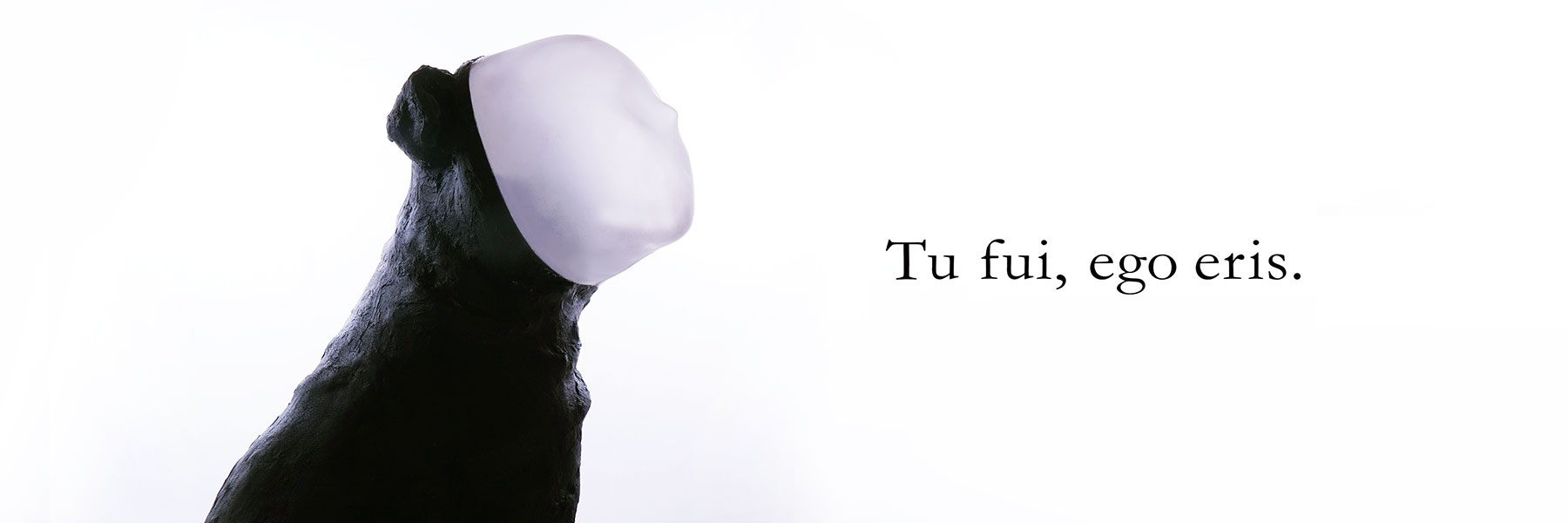
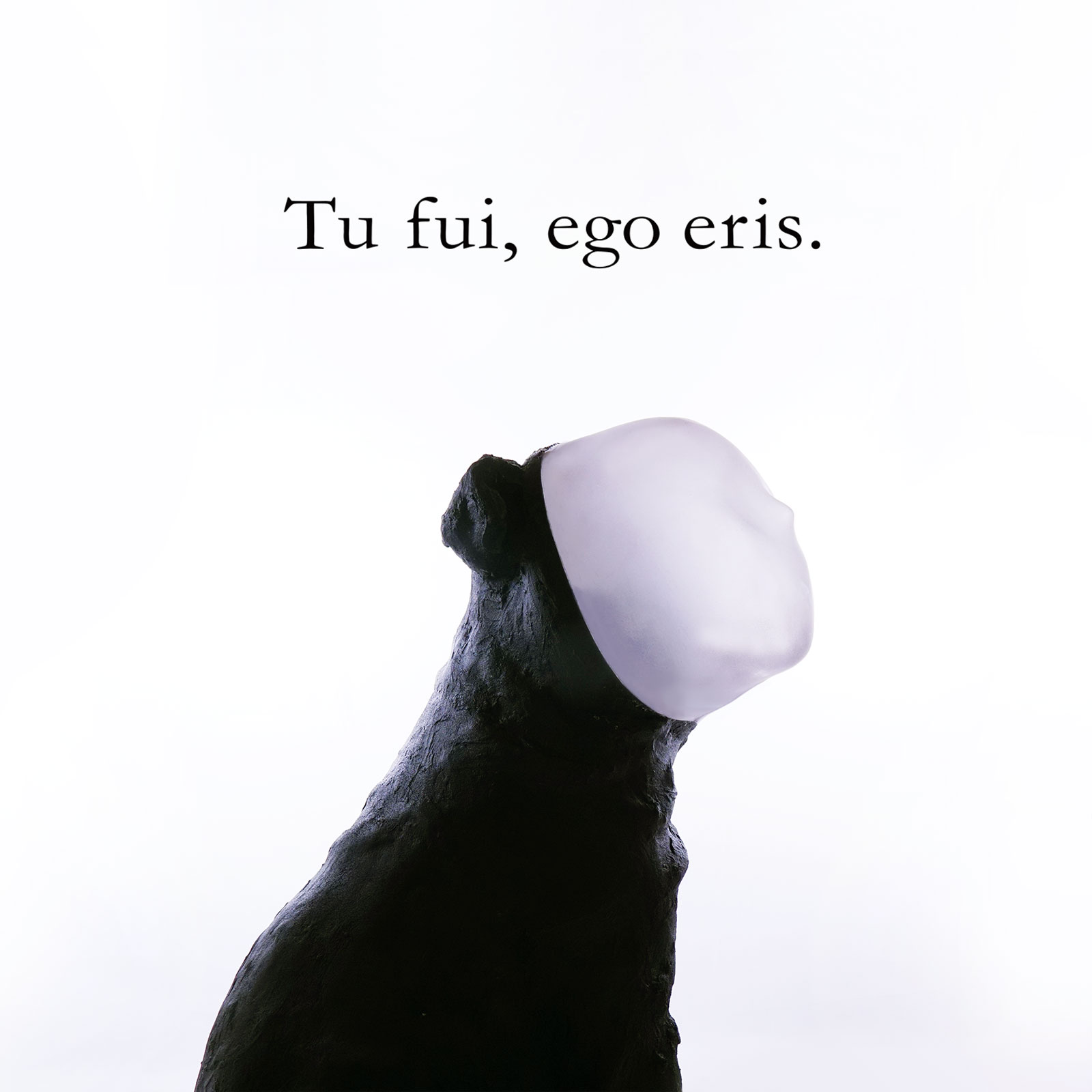
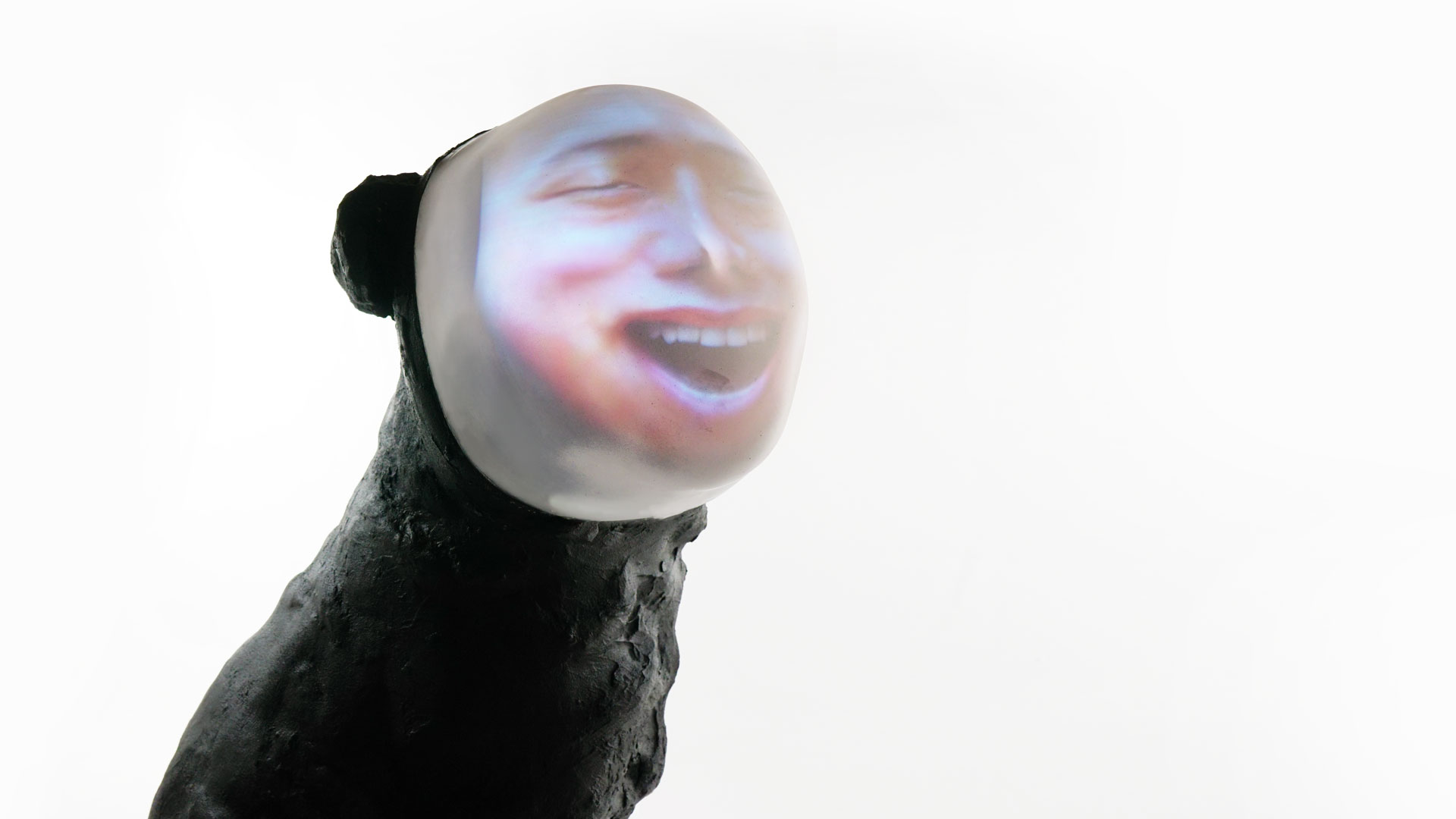
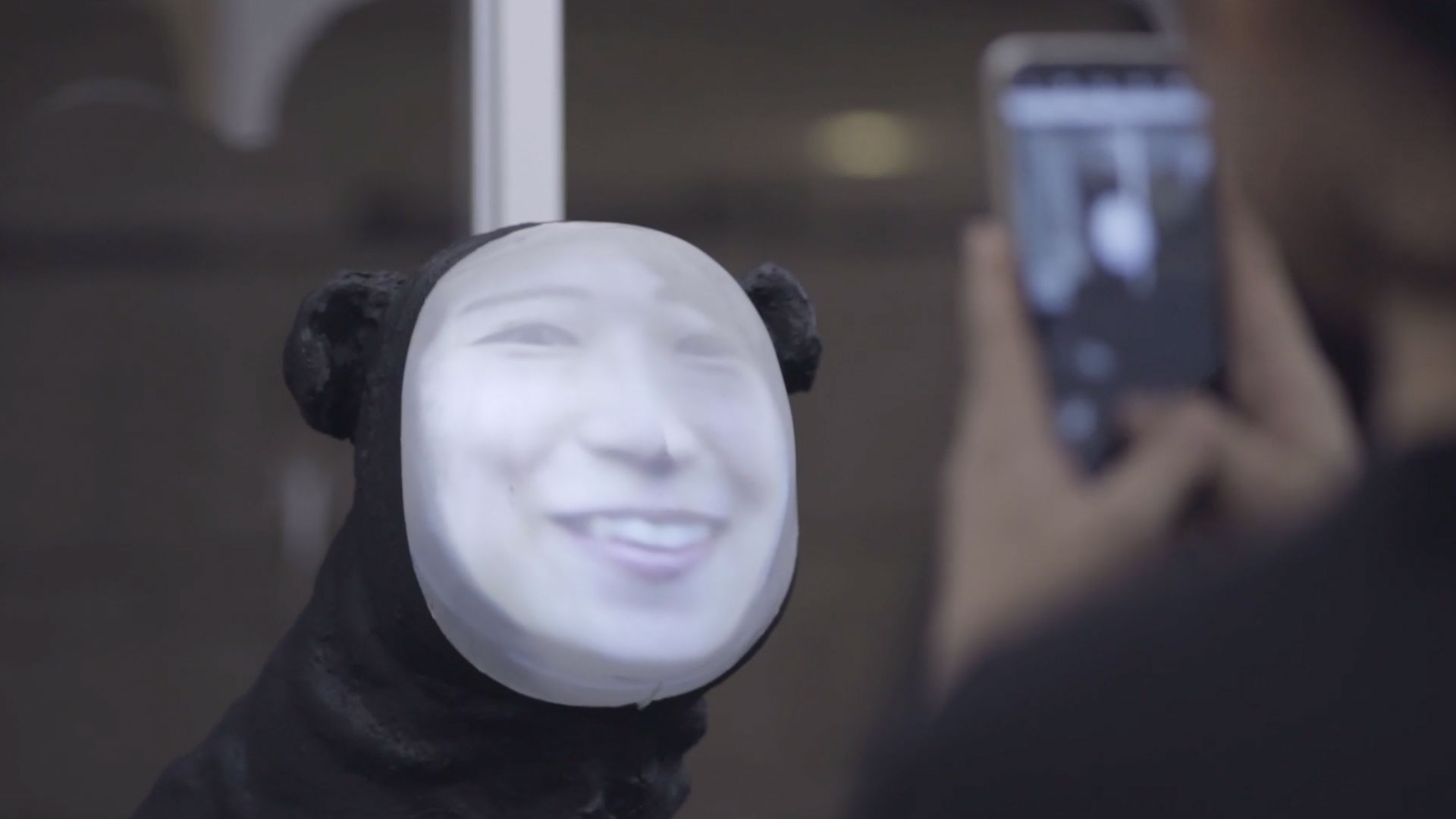
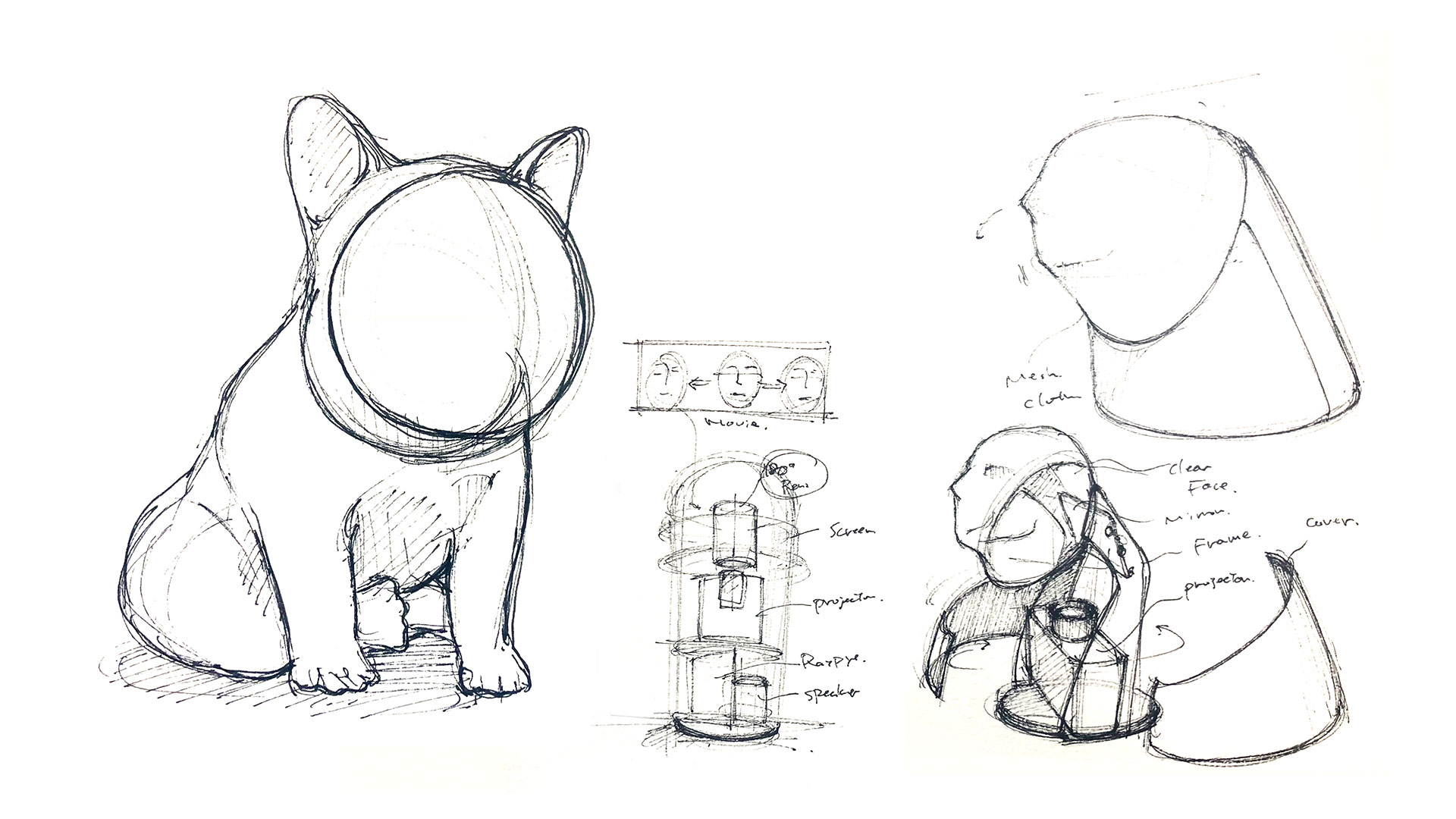
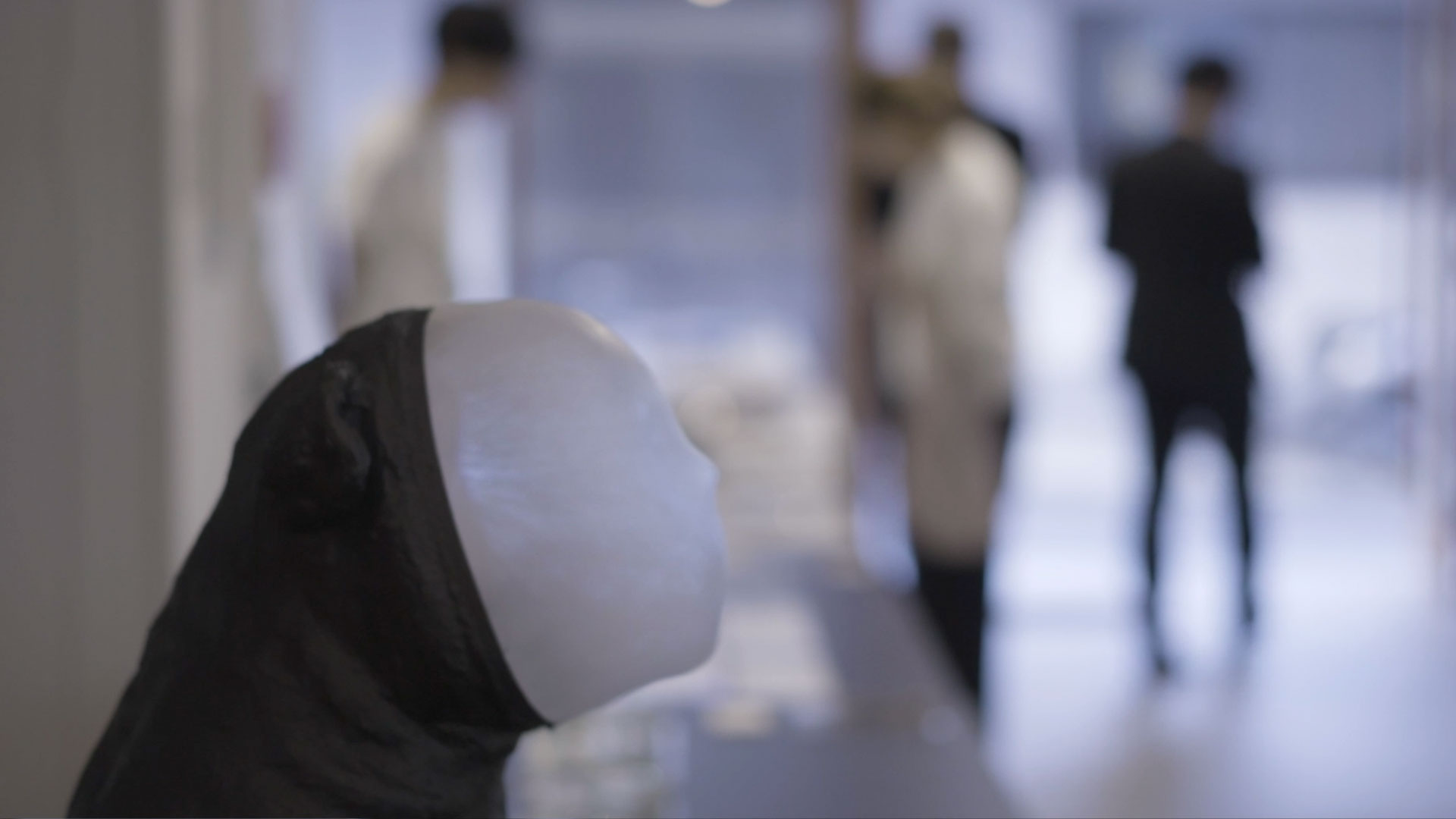
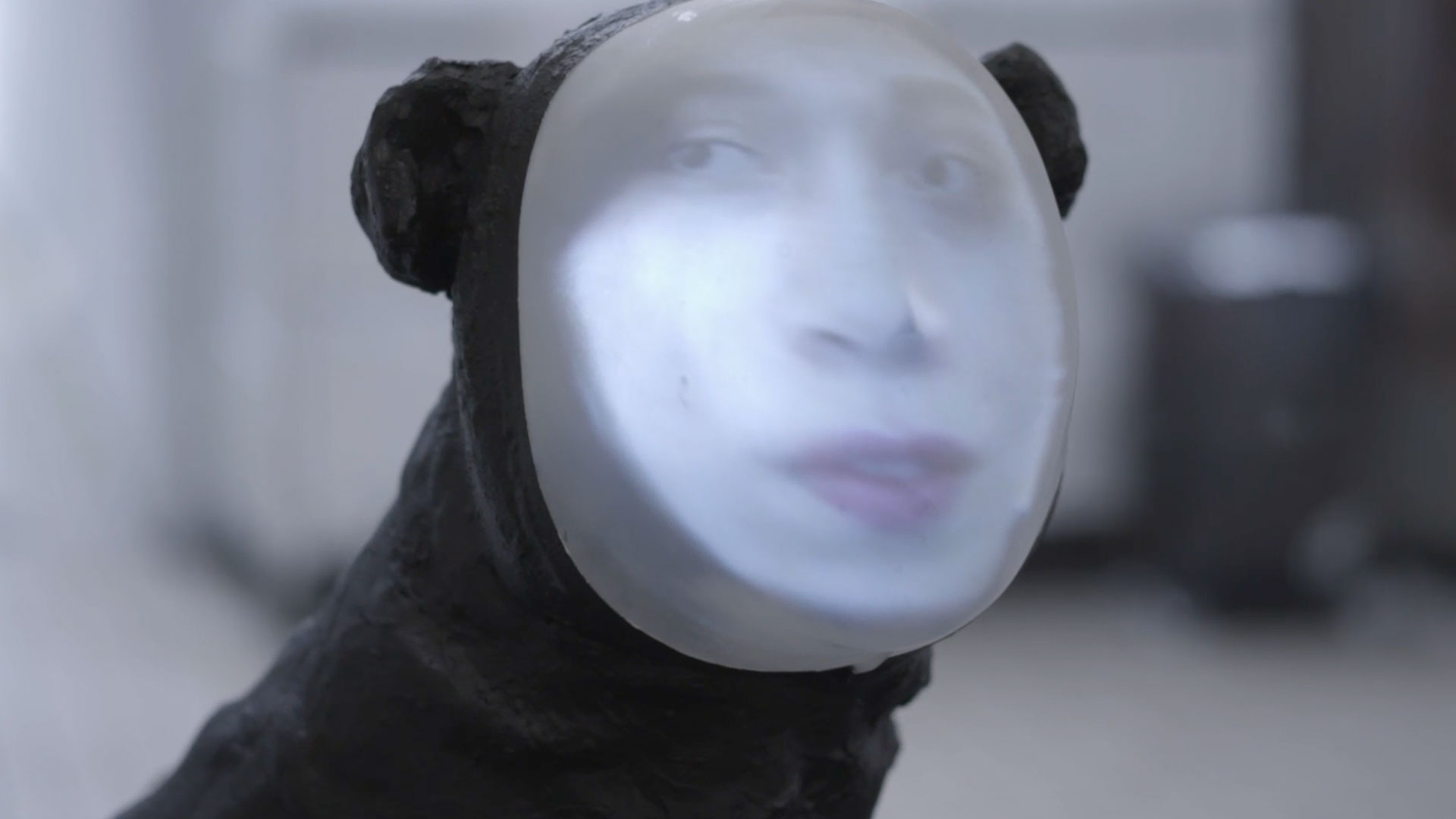
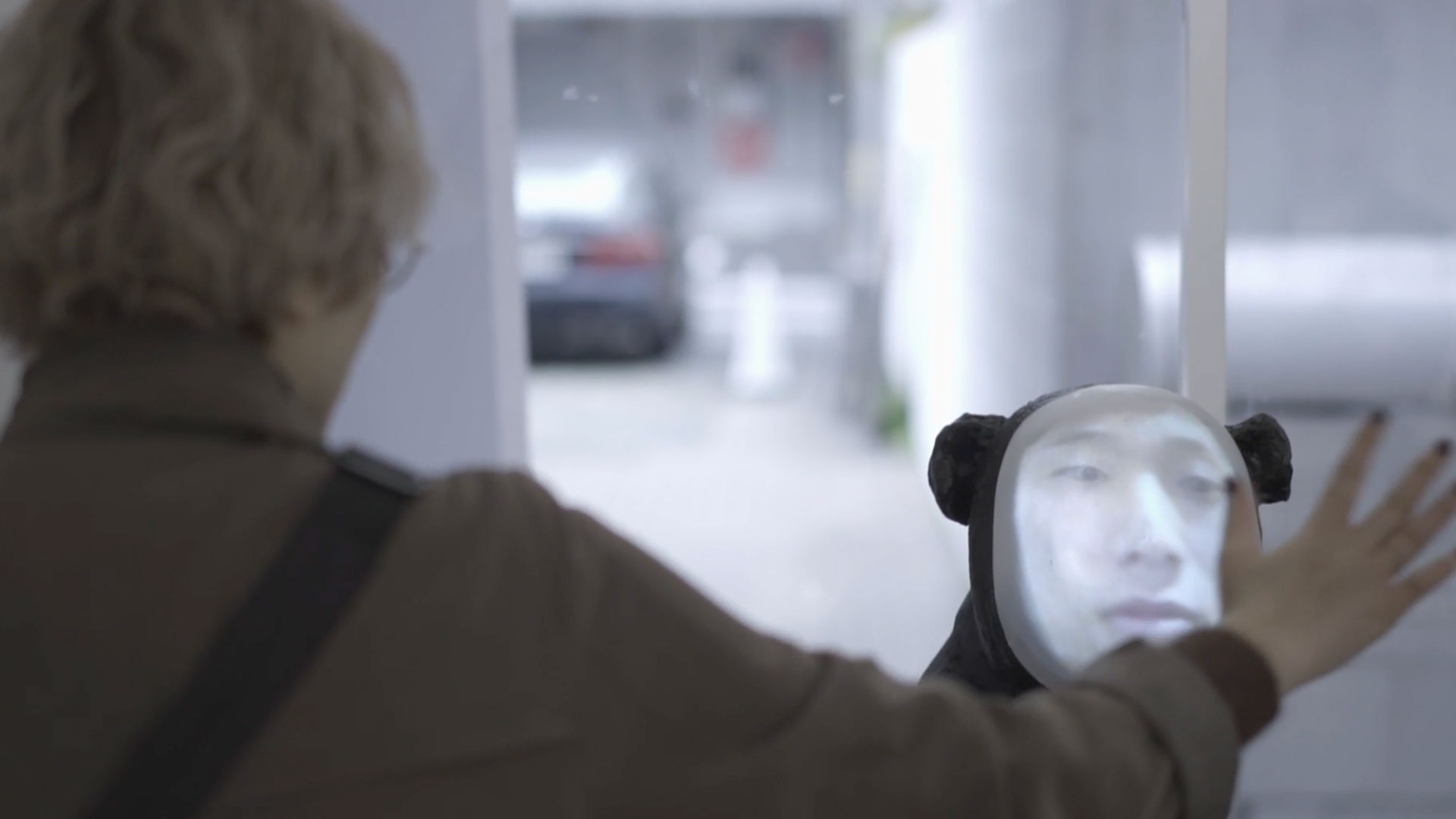
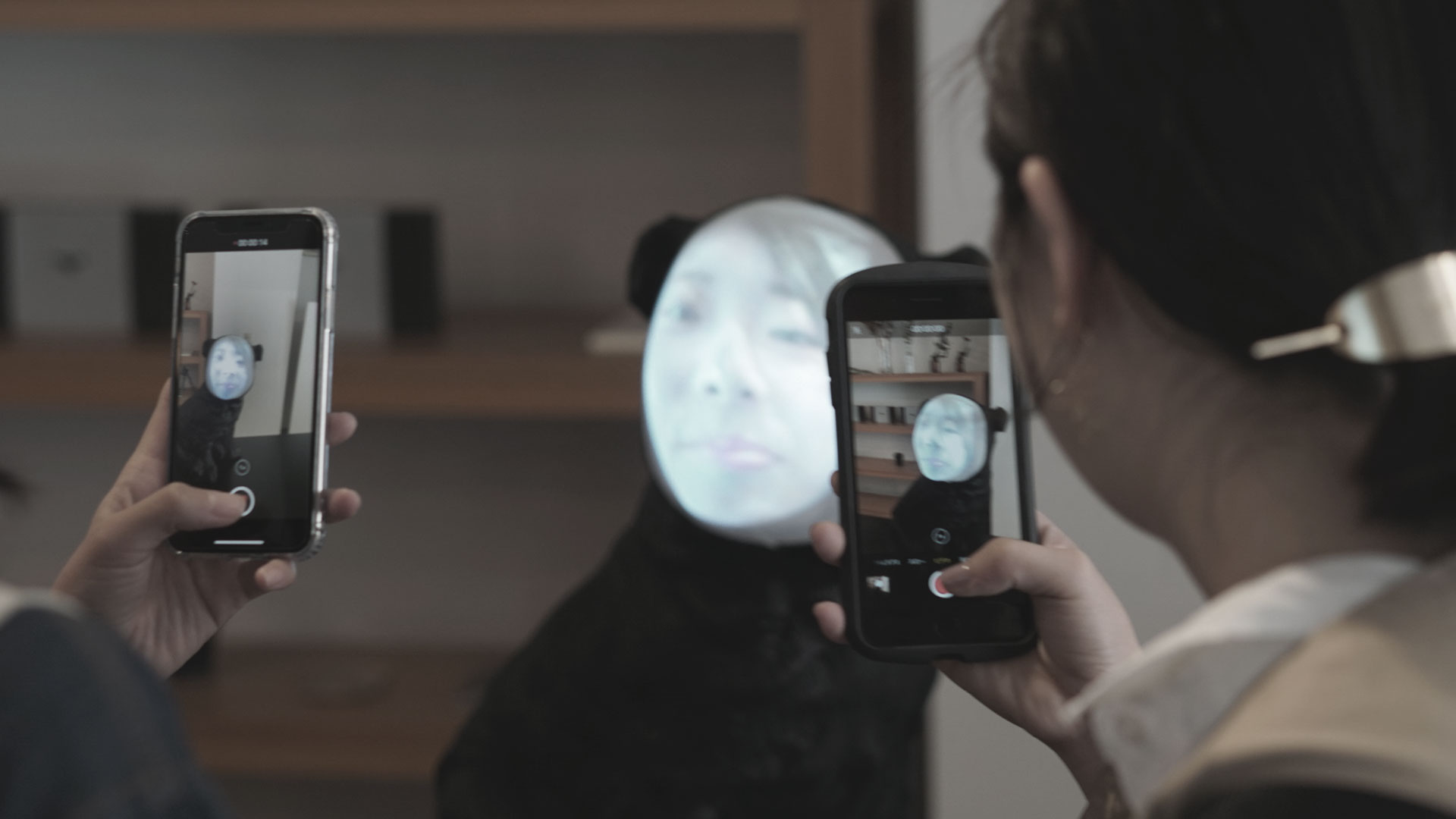
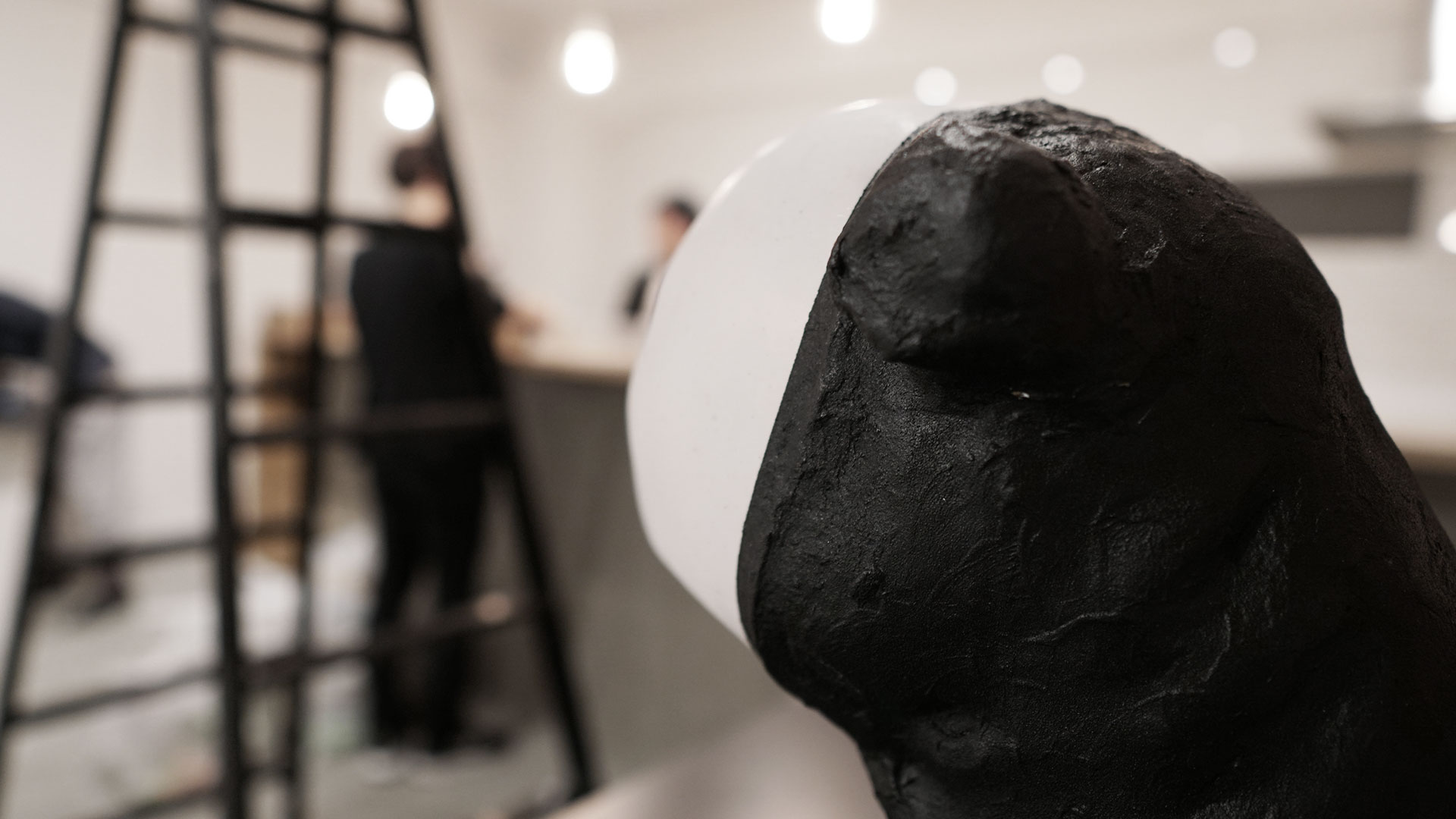
本作は、あらゆるものが最適化された理想的な未来の裏側に潜む「自己喪失の恐怖」を体感させるインスタレーションだ。目の前に立つ来場者の顔を認識・撮影し、あたかも意思を持つかのように振る舞うアバター(=デジタルクローン)をCGで生成し、犬型オブジェクトを介して提示する。
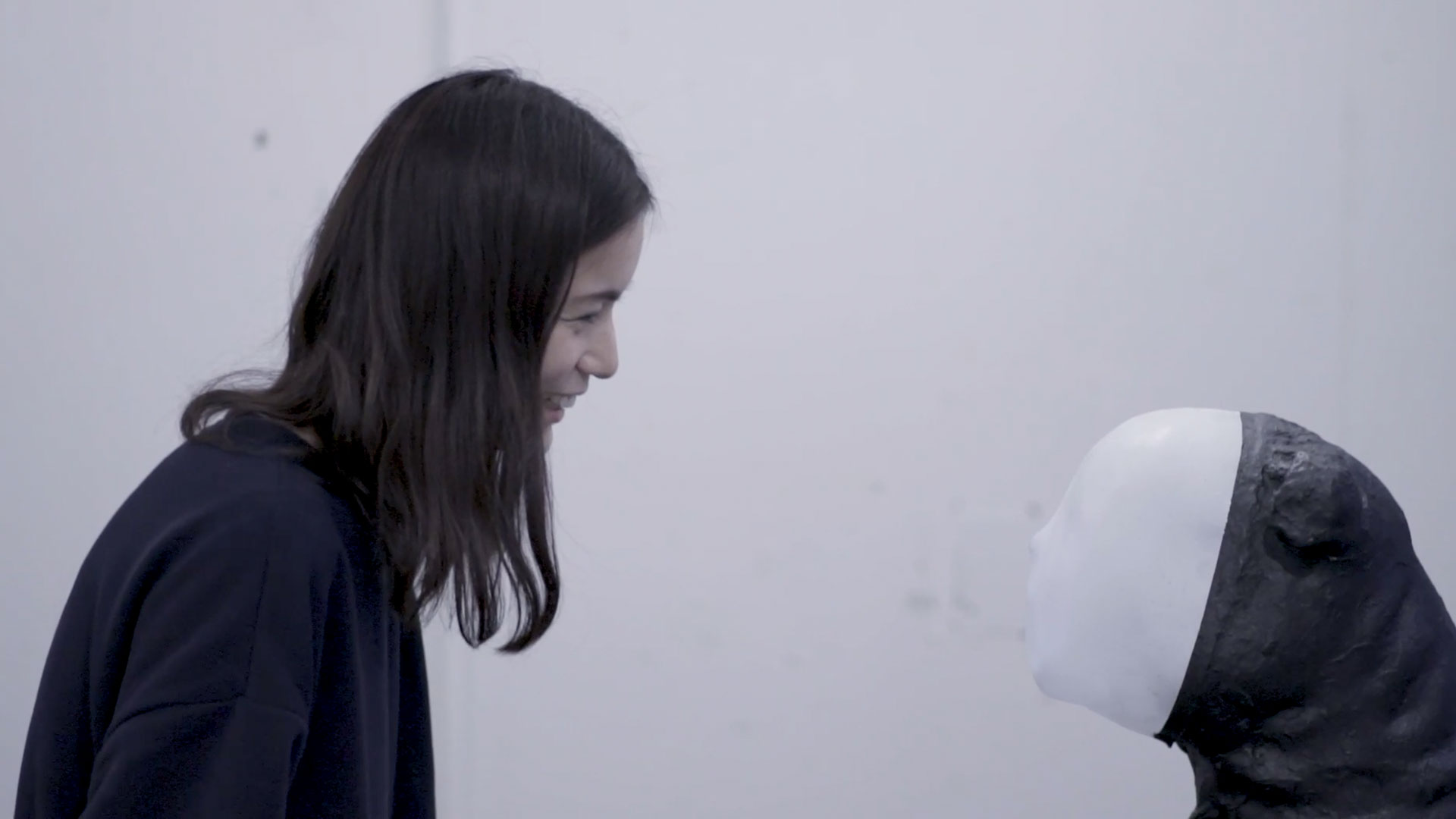
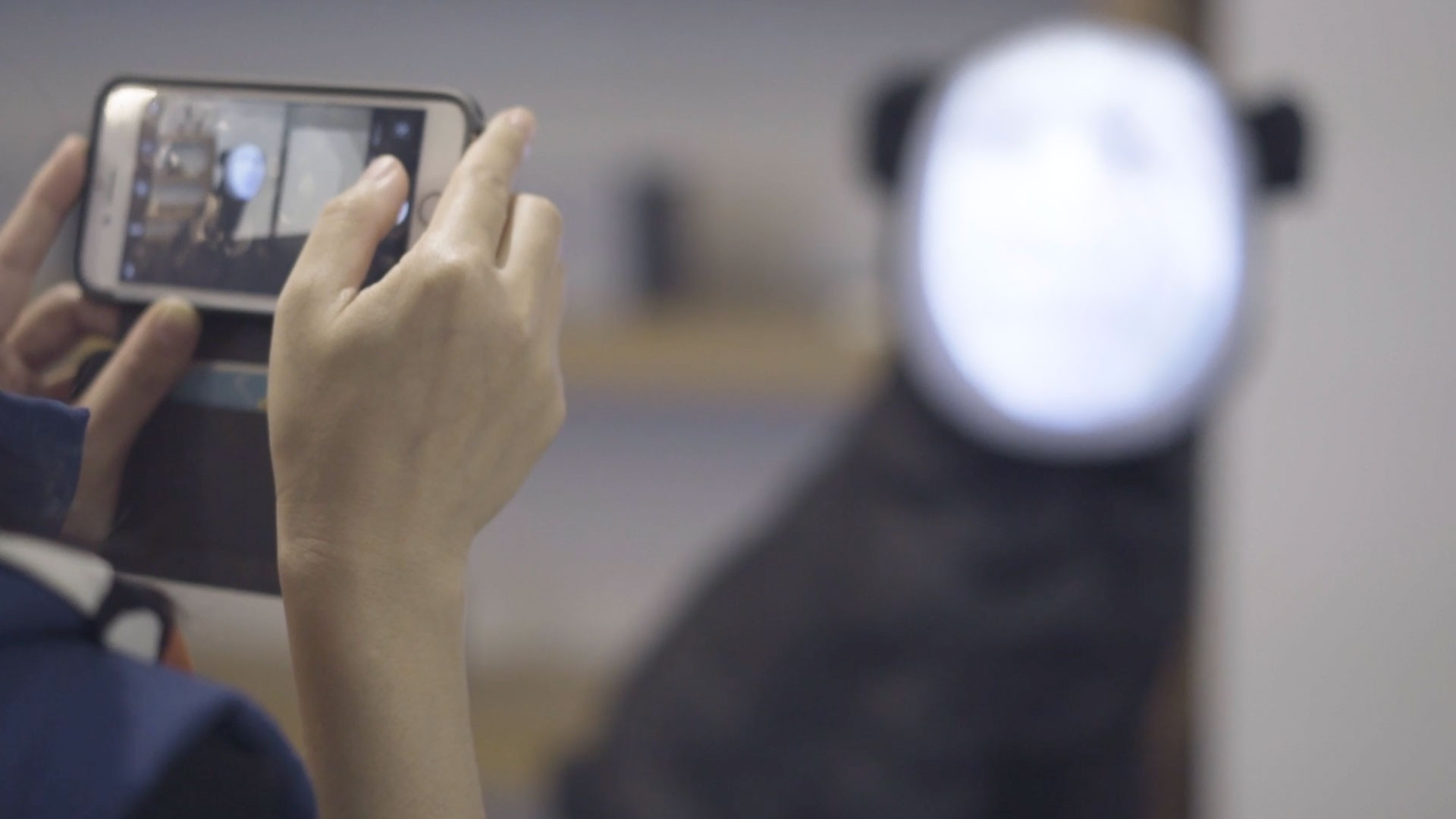
対面すると瞬時に自分の顔がトレースされ表示される。アバターは言葉を発するわけではなく、瞬きやゆっくりとした顔の向きの変化でこちらの動きに反応し、視線で追う。また、デジタルクローンの投影先は人型に限定されず、無機物や他の生物にも容易に適用できる。本作では、人間に最も馴染み深い存在として犬を選び、「人間でない別の生物」に自分が投影される違和感と不気味さを際立たせている。
This work is an installation that makes you feel the fear of losing oneself—an anxiety that lurks behind a fully optimized, ideal future. It recognizes and photographs the face of a visitor standing before it, generates a computer-graphics avatar (a digital clone) that behaves as if it has its own will, and presents that avatar through a dog-shaped object.
When someone faces the piece, their face is instantly traced and displayed. The avatar does not speak; it blinks, slowly turns its head, and reacts to the viewer’s movements, tracking them with its gaze. The digital clone need not be limited to a human form—it can be applied to inorganic objects or other creatures. In this work, a dog was chosen as the projection target—familiar to humans—to sharpen the uncanny dissonance of seeing oneself cast onto a nonhuman being.
物理的な生命体としてのクローン研究は世界中で進んでいるが、ヒトのクローンが実際に作られるのは倫理的・法的・技術的な問題が多く、まだ遠い未来の話だろう。一方でAIの進化は目覚ましく、問い合わせ対応のチャットボット化や電話応答の自動化が日常に広がりつつある。思っているよりもかなり早く、電話や画面越しの相手が人間かAIかを判別できなくなるだろう。加えて、VRデバイスや関連テクノロジー、サービスの急速な進展によって、移動コストをはじめとする物理的制約から我々は解放されつつある。近い将来、virtualとrealの境界は曖昧になり、VR空間ではリアルアバターをまとって仕事やレジャーに勤しむようになるはずだ。
リアルアバターはデジタルデータであるがゆえに無限にコピーできる。個人の特性を学習したAIを自分のリアルアバターのコピーにインストールし、ゲーム世界のNPCのようにVR空間内でさまざまな仕事や役割を担わせることは想像に難くない。言うまでもなく、AIが投影されたリアルアバターのコピーは、現実世界のクローンに非常に近い存在になる。
Research into biological clones is underway worldwide, but creating human clones remains a distant prospect due to ethical, legal, and technical challenges. Meanwhile, AI has advanced dramatically, and chatbots for customer inquiries and automated phone responses are becoming widespread in everyday life. Sooner than people expect, it will be difficult to tell over the phone or screen whether the party on the other end is human or AI. In addition, the rapid progress of VR devices, related technologies, and services is freeing us from physical constraints such as travel costs. In the near future, the boundary between virtual and real will blur, and people will don realistic avatars in VR spaces for work and leisure.
Because real avatars are digital data, they can be copied infinitely. Installing AI trained on an individual’s traits into copies of one’s own realistic avatar—and assigning those copies various jobs and roles in VR, like NPCs in a game—is easily imaginable. Needless to say, AI-driven copies of realistic avatars will come to resemble real-world clones in every important respect.
Other works
Copyright © xorium All rights reserved