
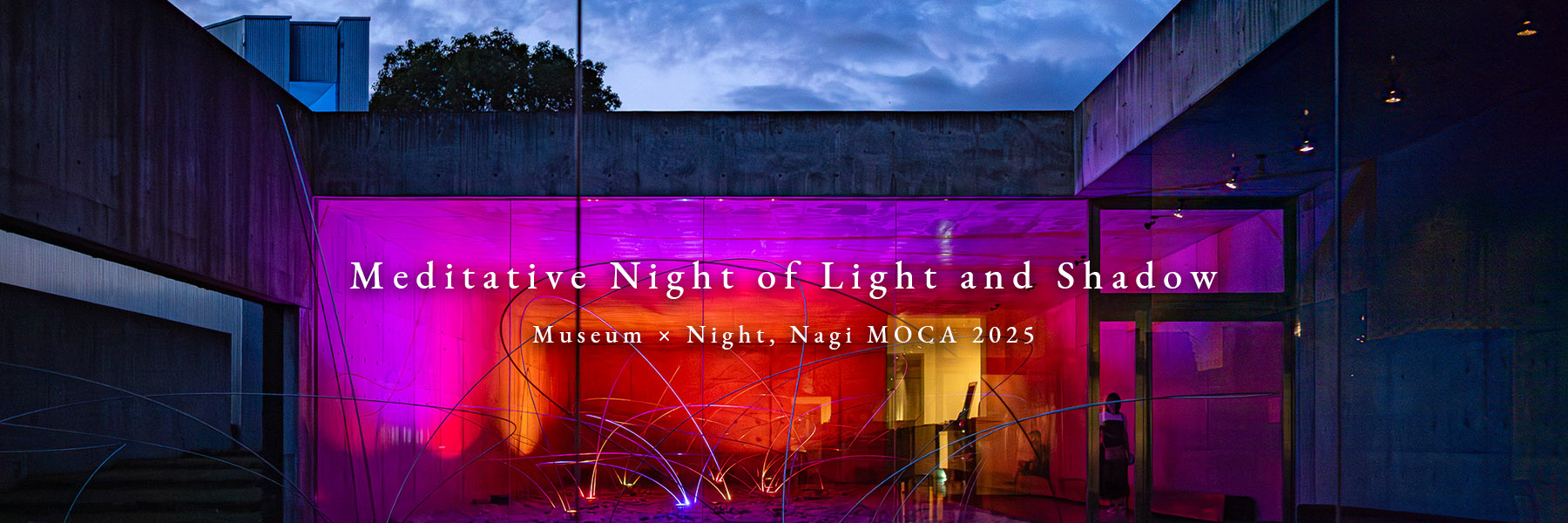
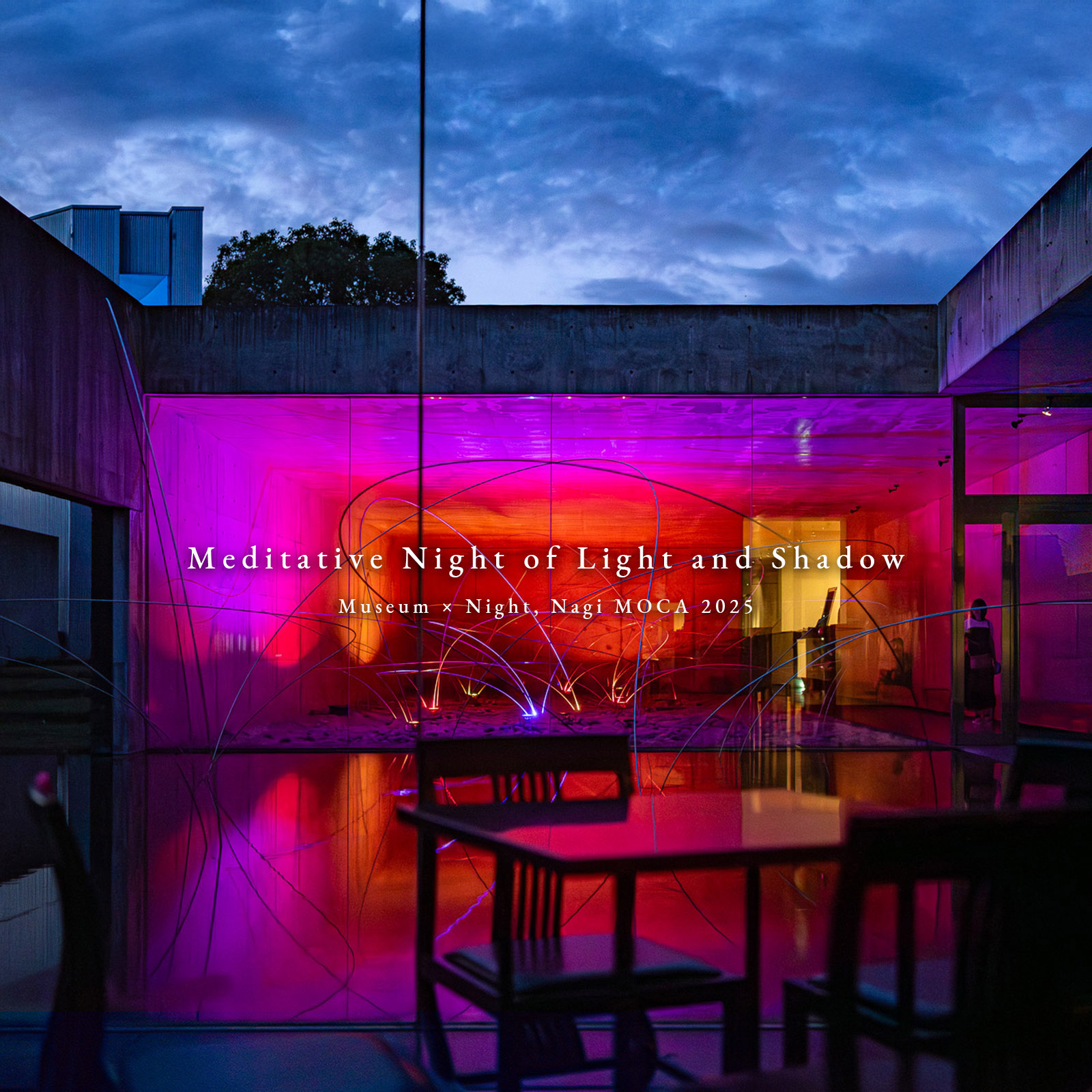
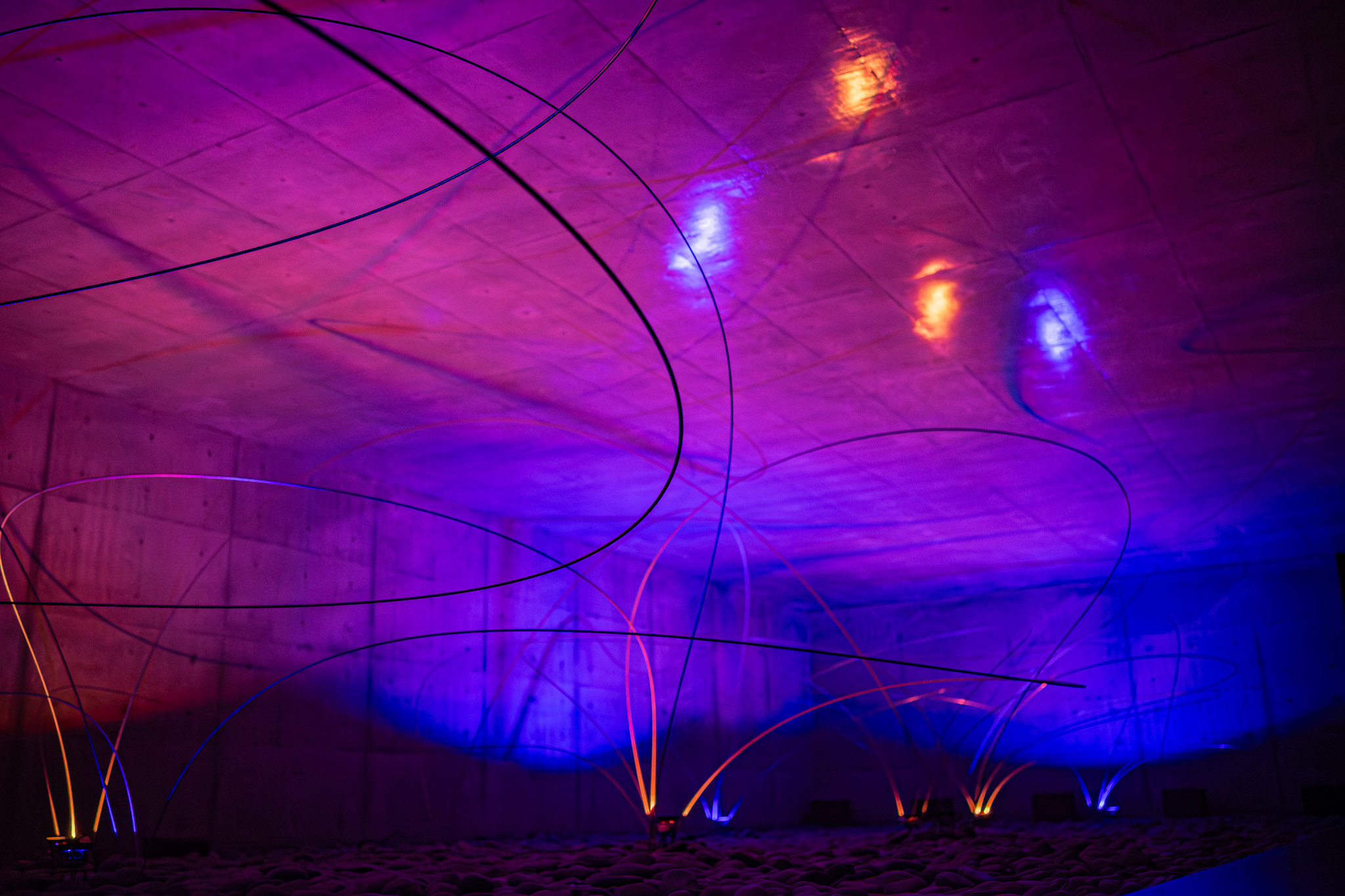
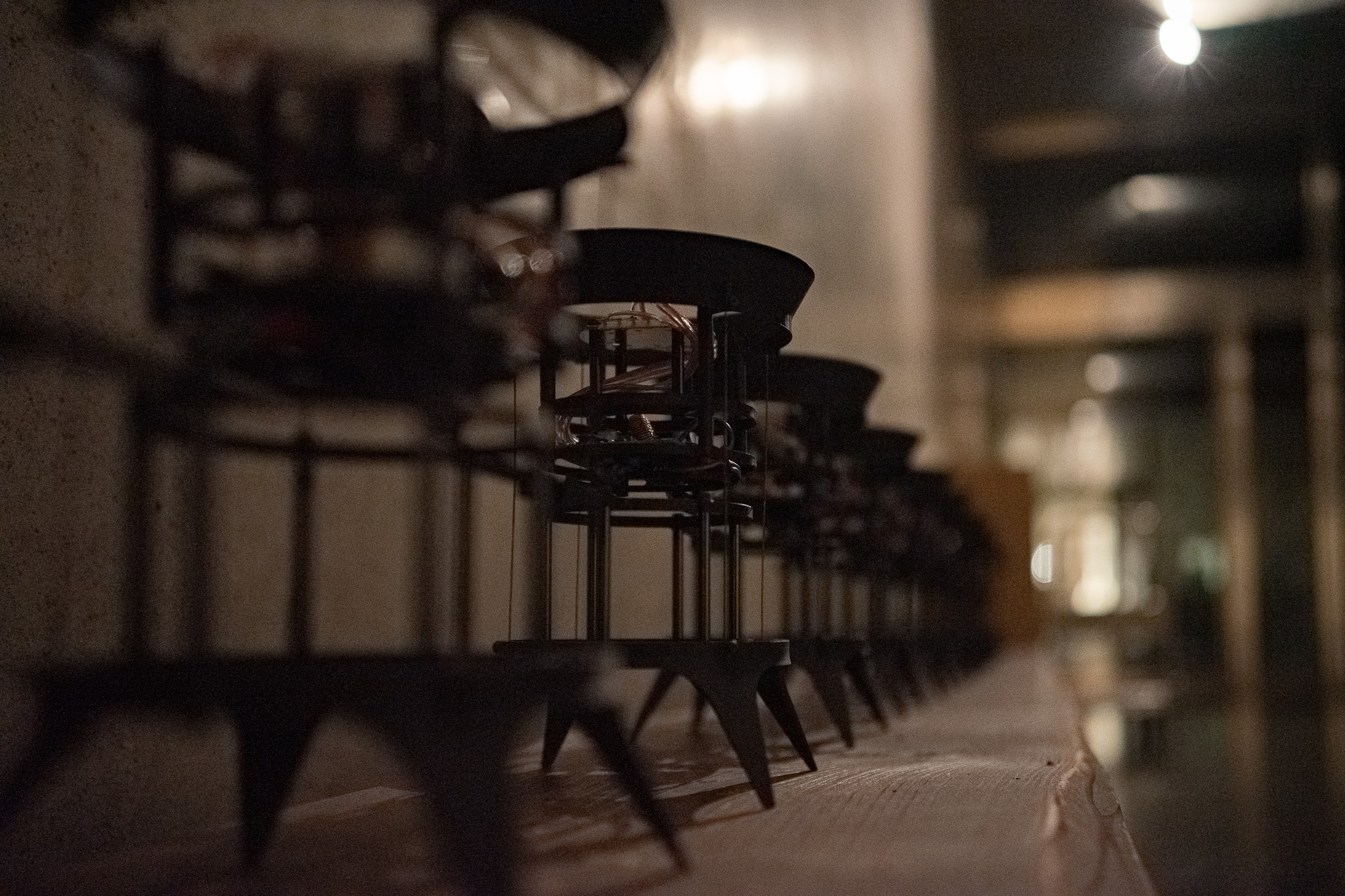
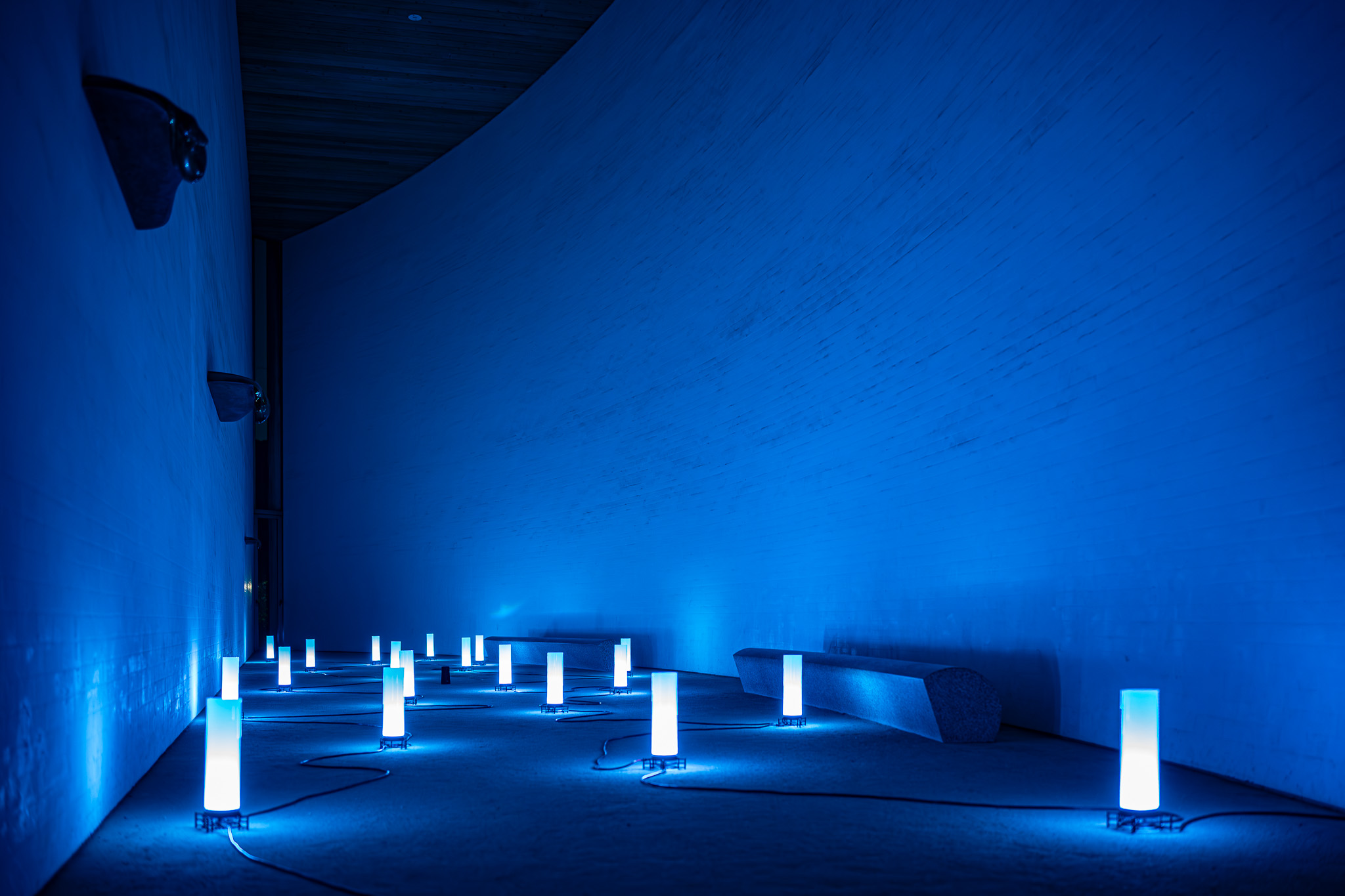
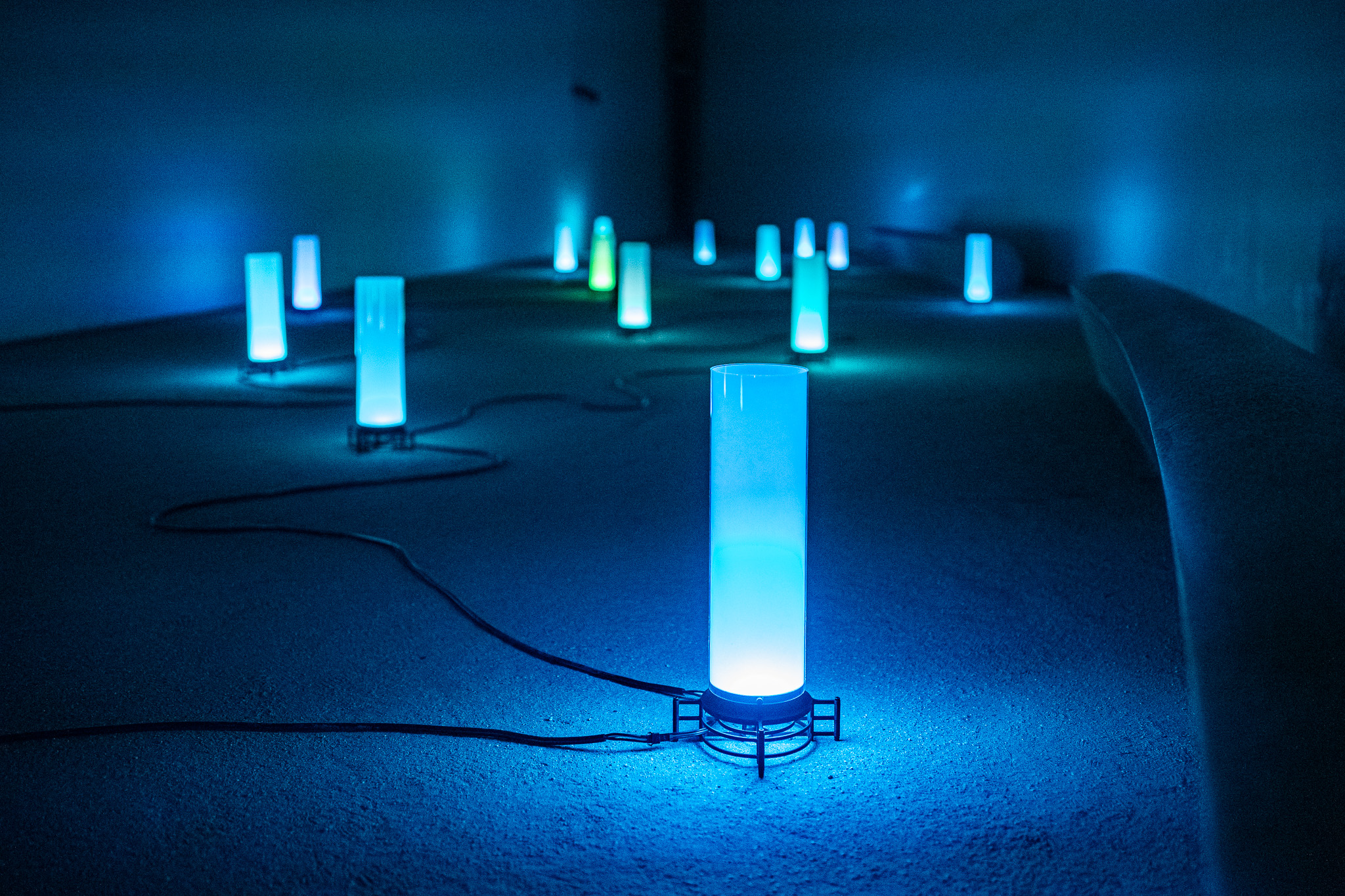
奈義町現代美術館の「大地の部屋」「月の部屋」「太陽の部屋」それぞれに対して、光や影を手がかりに作品の拡張を行った。ある時、xorium メンバーで人生稽古というプログラムに参加し、京都の妙光寺春光院で禅を体験した。身体の各部に意識を向け、研ぎ澄まされた感覚であるがままを受け入れたとき、身体はそのままに意識だけが空間に広がっていく体験をした。そこではじめて身体と魂は別物ではないかと考え始め、社会システムに則して合理的に生きることで、身体と魂が同一化してしまっていたのではないかという疑いが生まれた。
奈義現代美術館の背景を調査すると、建物全体のコンセプトが瞑想を軸に身体感覚の解放を目指し、「魂としての自己」を獲得することを意図していることがわかった。禅で得た感覚と我々の表現したい想いは近く、この発見が今回の表現の根拠となった。世界に先駆けて「作品」「建築」「地域環境」が融合する第3世代の美術館として作られた NagiMOCA から夜間開館のための制作を依頼され、ここに展示する以上は単なる「夜の演出」にならないよう、夜というシチュエーション自体が新たな作品の意味を生む表現を目指した。
建物とともに在り続ける「大地」「月」「太陽」の各作品に対してリスペクトを払い、光による拡張を試みた。光は単なる照明ではなく、身体と意識の関係を問い直すための媒介として用い、各作品の領域を再提示し、観者の身体的な気づきを誘発することを意図している。
For each of the “Earth Room,” “Moon Room,” and “Sun Room” at Nagi Museum of Contemporary Art, we extended the works using light and shadow. At one point, xorium members joined a program called Jinsei Keiko and practiced Zen at Myōkōji Shunkō-in in Kyoto; by focusing attention on the body and accepting things with sharpened awareness, we felt consciousness spread into the space while the body remained, which made us question whether body and soul are separate and whether social rationality has conflated them.
Research into Nagi MOCA’s background revealed that the building was conceived around meditation and the liberation of bodily sensation, aiming to enable the self as a soul. The sensations from Zen closely matched our intent and became the basis for the work.
Nagi MOCA—created as a pioneering, third-generation museum where works, architecture, and the regional environment merge—commissioned us for its night openings. We therefore avoided a mere “nighttime spectacle” and aimed for an expression in which night itself generates new meaning for the works.
Out of respect for the “Earth,” “Moon,” and “Sun” works that remain with the building, we extended each through light. Light serves not only as illumination but as a medium to reexamine body–consciousness relations, restage each work’s domain, and provoke bodily awareness in the viewer.
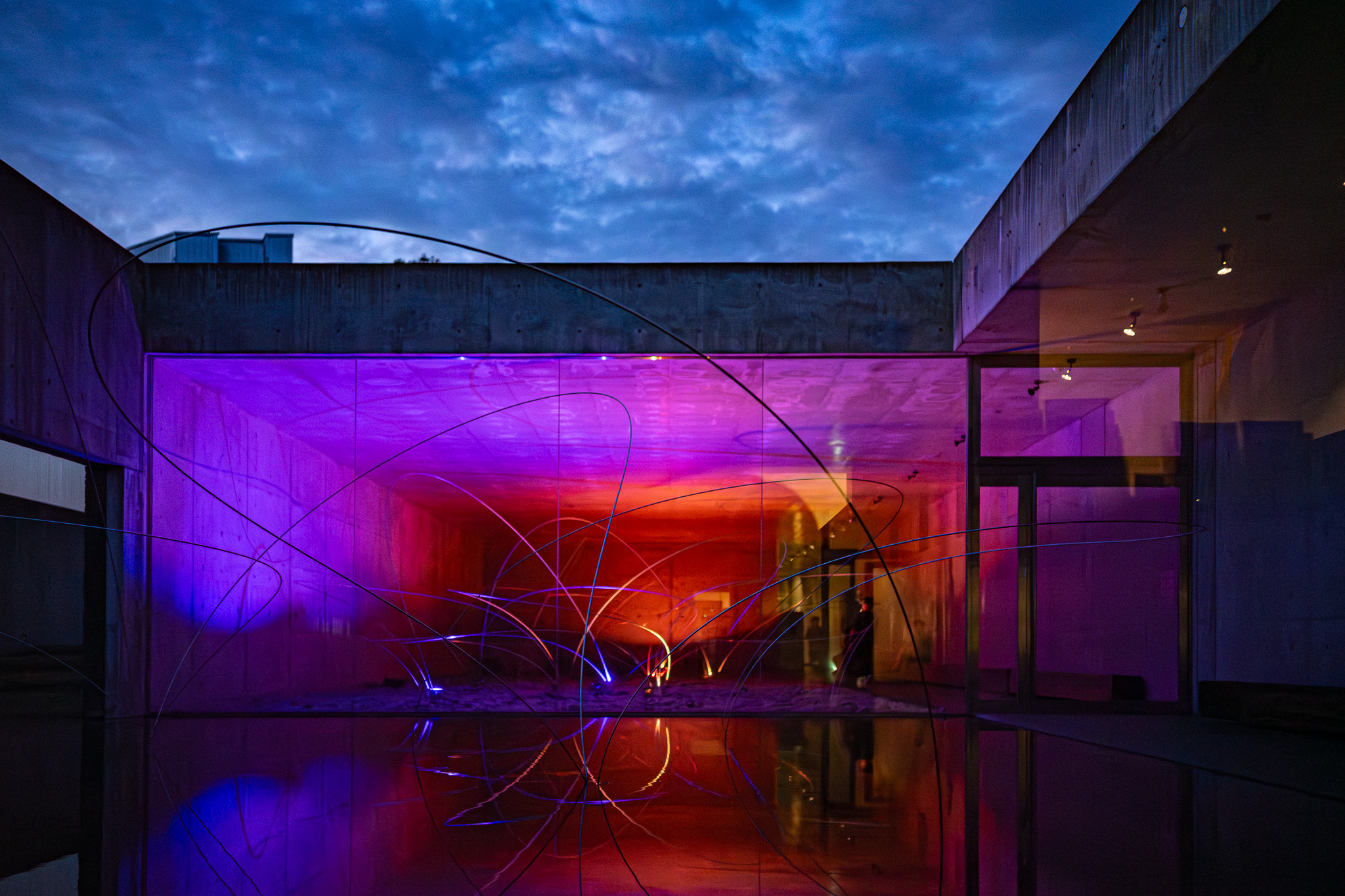
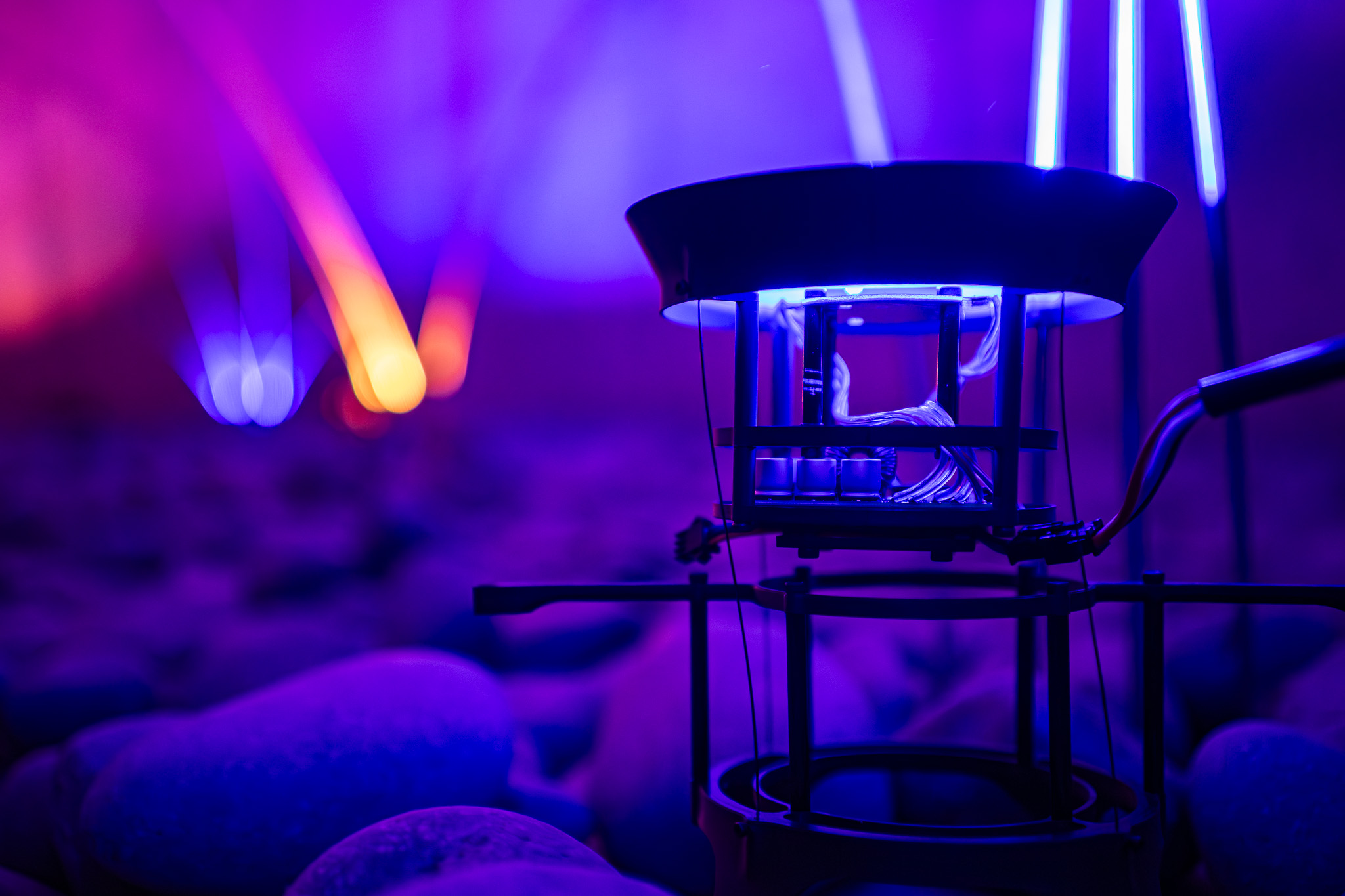
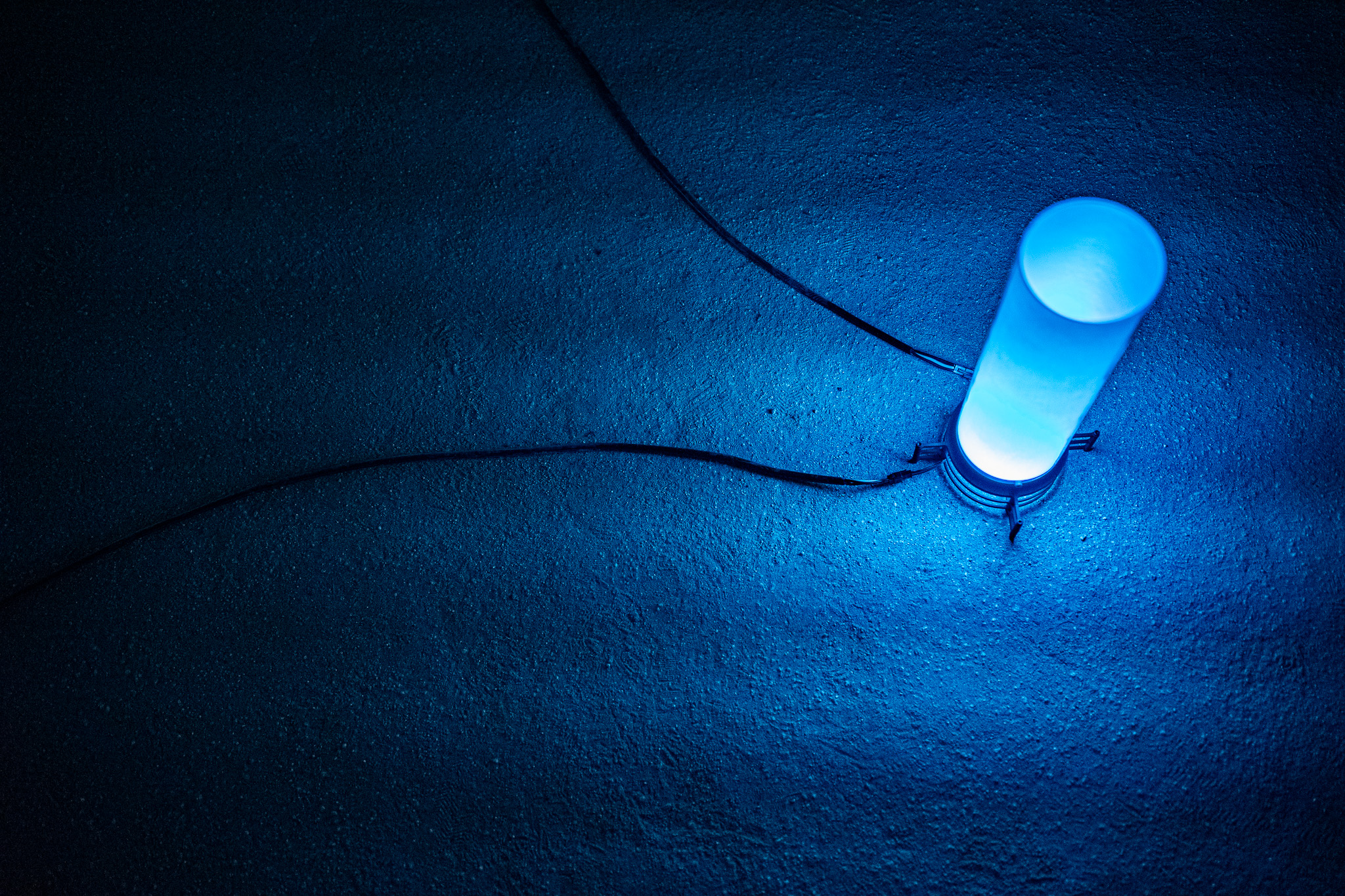
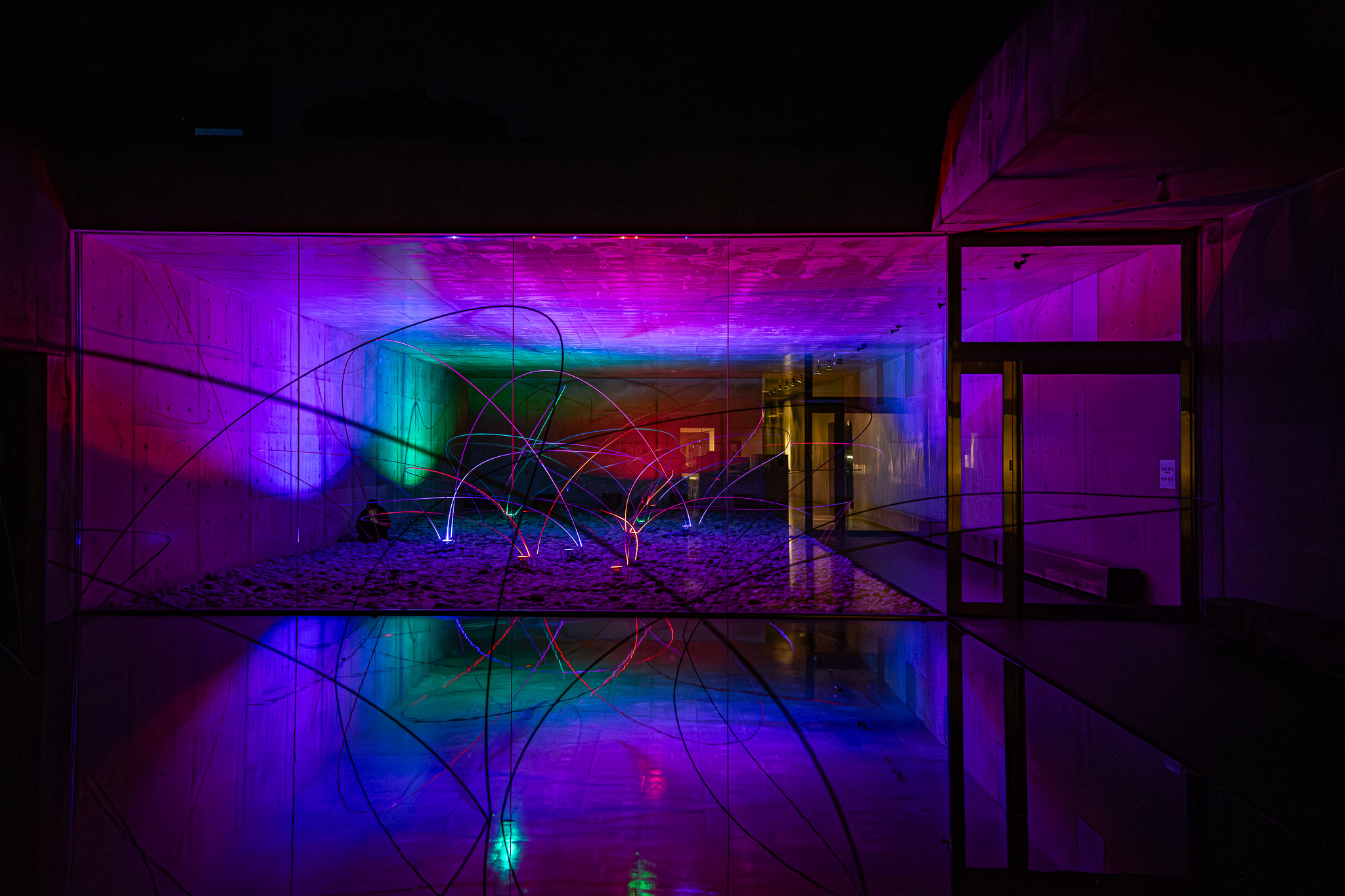
ミュージアム×ナイト 奈義MOCA 2025
光と影の瞑想夜
主催:奈義町現代美術館
会場:奈義町現代美術館
作品制作:xorium
音楽制作:Betts(JP)
Museum × Night - Nagi MOCA 2025
Light & Shadow: A Night of Meditation
Host: Nagi Museum of Contemporary Art
Venue: Nagi Museum of Contemporary Art
Artwork produced by: xorium
Music: Betts(JP)
Other works
Copyright © xorium All rights reserved